After my divorce and my grandmother’s death, my little daughter Savannah and I had few options and dollars in finding a place of our own. Depression and medication were like my second and third children. After my grandmother’s death, I inherited my father’s childhood home and my grandmother’s collection of dolls. The collection is famous in the neighborhood, among church friends, and family. Everyone knew about the dolls, and in our small family, no one wanted to come too close or stay alone in the house with them. The dolls were kept in the back room of the house, a room that once belonged to an aunt who died when she was five years old in 1950, forever known as Charlotte’s room.
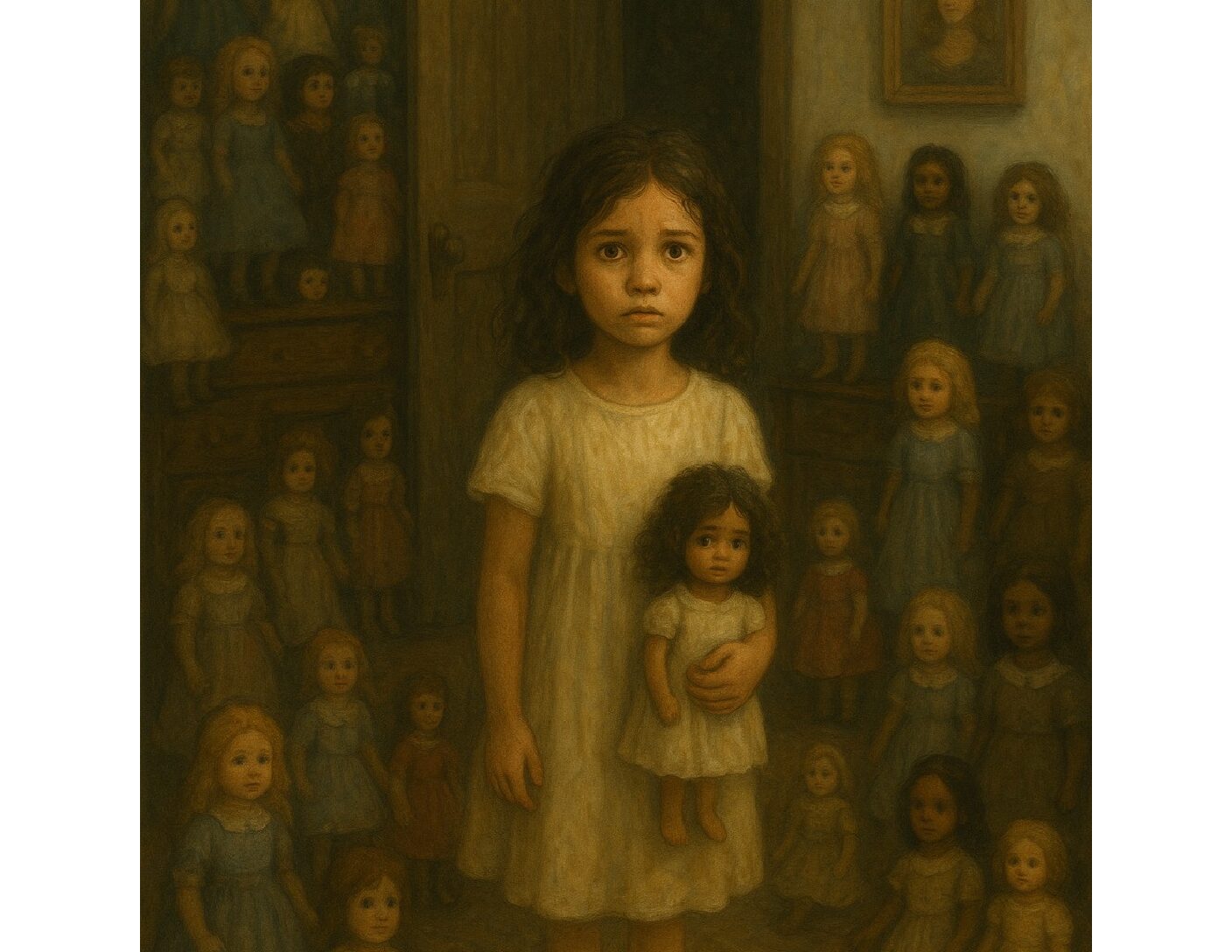
When I was growing up, I was made to practice my piano lessons there, not being allowed to leave the room until I had completed a full two hours. There were hundreds of dolls, ranging from porcelain and ceramic to stuffed cotton, cloth, and plastic. Victorian and Gibson Girl, Marilyn Monroe and Scarlett O’Hara dolls, and every black Holiday Barbie from Mattel since 1990. Over the years, Grandmother added to her collection a personalized doll made in the image of Charlotte, with curly black hair, brown skin, and glossy eyes. Grandmother even had one made for me that sat next to Charlotte’s doll: my brown curls, small glasses, and peanut butter skin. The tag hanging from the small porcelain wrist reads Kimberly. It looked more like me than I did.
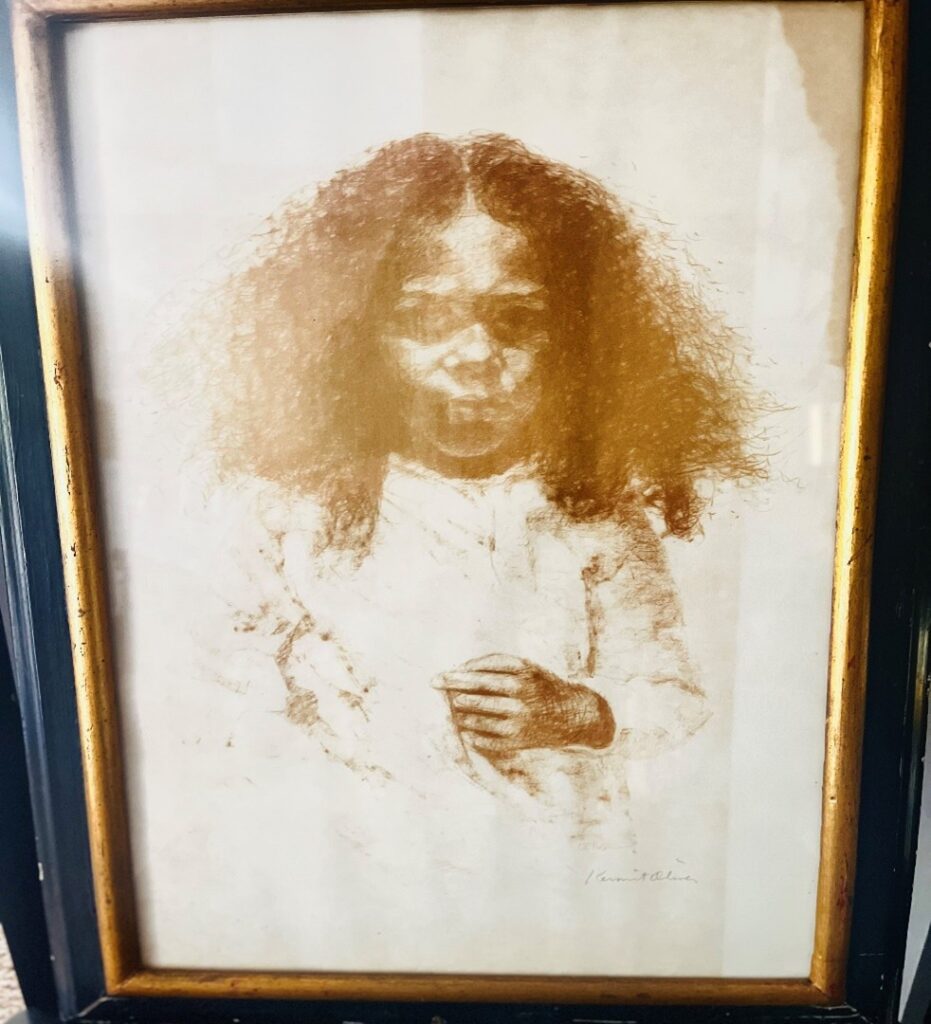
Our dolls always seemed to be waiting for me, for what I never knew and didn’t want to ask. The dolls sat on shelves, on pedestals beside the piano, atop the piano, inside the two antique curios under dim lights, on side tables, and under tables. Some stood in corners and watched. Their glassy eyes seemed to move with you, even if you made the slightest of movements. A drawing of little Aunt Charlotte hung over the piano, supervising my lessons. Grandmother commissioned the young artist Kermit Oliver to paint Charlotte, her hair blowing in the wind, sitting in a chair wearing a simple shift dress, her dark eyes holding secrets that none of us would ever find out. She died of rheumatic fever; something nowadays would be unthinkable. She died in her room, surrounded by her friends, the dolls.
I told Savannah we’d only stay here a few months while I looked for another job. We could never afford to maintain such a home with its many rooms, roofing, foundation, and plumbing issues. The house, nearly a century old, stood with an undeniable determination never to be torn down. Although there were issues, the house was in better shape than homes half its age. Built during a time when there was pride in construction, and materials were drawn from natural, durable sources. Savannah and I slept in grandmother’s room, right next to Charlotte’s. At night, I could hear what sounded like the opening of a door and the small patter of feet running across the old wooden floors. This old house makes noises, and that is all, I say to myself. In my dreams, I awake in Charlotte’s room, in her bed, and lying next to me are our dolls – smiling with bright, wide teeth.
When I wake up, in a sweat, I head to the room to see the dolls. Every time they seem increasingly changed, somehow closer to the door, their positions and limbs are different from the last. Only Charlotte’s doll remains the same, its eyes fixated on me, the drawing that hangs over the piano not quite like before. I don’t remember her standing. My Kimberly doll was now at the threshold of the door, its little arms stretched out. Savannah plays in the room sometimes and it makes me nervous, an unexplainable dread filling my body. Sometimes I can hear voices, more than one, they aren’t Savannah’s voice, but the sounds of many children playing. When I walk in to see, my heart drops. I don’t see Savannah. Her little body was the same size as some of the larger standing dolls, and she blended right into them so much that if she hadn’t moved or tried to scare me from hiding behind one, I would’ve never found her.
I have since doubled my daily dose of Zoloft.
At night, I can hear the scuffling of little feet again, low whispered voices coming from Charlotte’s room. A ding from one piano key. A smashing of glass. Am I dreaming again? Patting the covers beside me I don’t see Savannah there. The bed was cold as if she hadn’t been there all night. I call out to her, and there is giggling with more noises coming from Charlotte’s room. I get out of bed, open the door slowly, and see that Charlotte’s room door is open, but the lights are off, the moonlight casting a blue light over the wood floors, glass from the shattered painting shining like stars in the shadows. I turn the painting over to find it changed: Charlotte’s image is gone; only the chair she sat in remains, and a rustle from the corner.
“Savannah?”
Out of the darkness steps Charlotte in her shift dress, holding a doll with Savannah’s face and hair. My Kimberly doll was next to her on the ground with her porcelain face smashed in. Behind me, all the dolls begin to stand up from their positions. The curio doors creak open, being pushed by little ceramic and porcelain arms as the dolls jump down onto the floor. The Barbies removed the ties and binding that kept them secure inside their boxes. Six or seven dolls on the piano bench are playing a nursery rhyme, scooting close together to make room for other dolls who are now climbing the bench’s legs. Charlotte walks toward me. There is no air in my lungs, and my heart is pounding faster by the second.
“Do you want to play?”