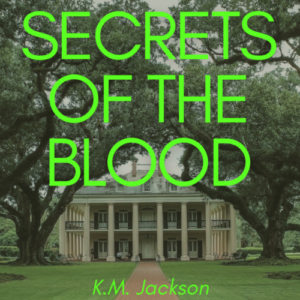
When a young Creole girl named Marie is left alone in her family’s Louisiana home, she uncovers a haunting legacy of vampirism rooted in blood, lilies, and secrecy. Drawn into the curse through a forbidden cake, a burning rosary, and a blood-signed contract, she transforms from innocent to immortal heir of her family’s dark inheritance. In the end, Marie learns that in her family, love and hunger are the same thing.
He left me behind. My grand-père. My papa.
I took too long to get ready, uselessly applying foundation in the sweltering heat of Louisiana. He said I was always running my mouth and never running fast enough. This time, he would prove it.
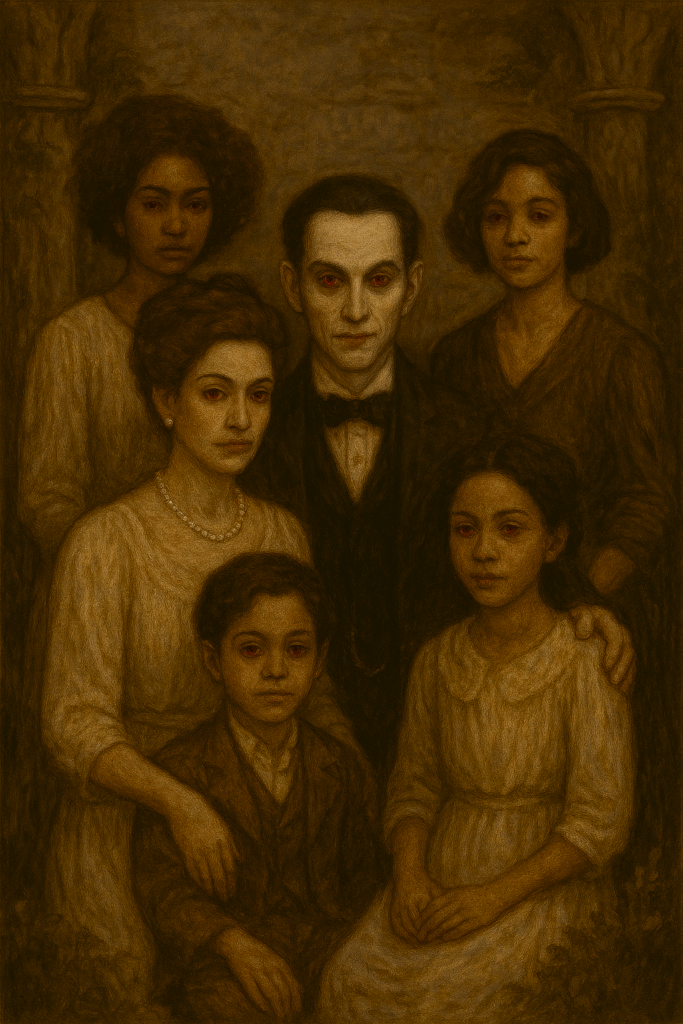
By the time I thundered down the green shag-carpeted stairs, they were gone. Out the kitchen window, I saw clouds of dirt chasing two Oldsmobile Regencys —one blue, one burgundy —carrying my parents, my Papa, and my three cousins, the Three Maries.
Every woman in our family bore the name Marie, honoring Marie Thérèze CoinCoin, our ancestor and healer, whose portrait watched us from every wall.
CeCe scowled through life, Suzy wore roses and smiles, and Addy, forever in black, spoke only when the dead might listen. When they argued, the house grew tense as summer thunder. I’d once heard them hissing behind a cracked door—about “lilies,” “coffins,” and “people getting too curious.” CeCe caught me listening and dragged me off by the ear.
Now the house was empty, and I’d missed our trip to Magnolia Plantation, the ancestral birthplace of our line. In Papa’s kitchen, the air smelled of chocolate and moss. On the green linoleum table sat a crystal dome holding Tante Celina’s famous Swamp Lily Cake, glossy with dark icing. The note taped to it read:
“Mon cher, since you have so much time—string up the swamp lily root before we get back.”
Beside the cake lay dried root cubes, a needle, and black thread. We sold necklaces of it in Houston— “teething charms,” Mama said—but I knew the swamp lily was older, sacred. It kept the family safe.
I sat for hours threading roots, watching the sun sink—still no headlights, no laughter, no Papa. Hunger gnawed at me. In a fit, I swept the roots off the table and plunged my hand into the cake—the rich, bitter sweetness melted on my tongue.
The cake’s recipe had been passed down for generations—a mixture of cocoa, cane sugar, and ground swamp lily root. “To sweeten the blood,” Papa said once, winking. I hadn’t known how literal that was.
That night, the house creaked with its own memory. The frogs croaked, cicadas hissed, fireflies blinked across the swamp grass like floating embers. I had never been alone this long, and curiosity pressed against my ribs.
Eight rooms were off-limits to me, always locked or guarded by Papa’s stare. Now, I could explore them all.
I climbed the stairs, flashlight trembling in my hand, past the bedrooms of the Three Maries with their canopy beds and open shutters where frogs perched like sentinels. At the end of the hall, I found a narrow door leading into what had once been the servants’ quarters. The air smelled of dust and varnish.
Inside were stacked portraits of our ancestors, faces half-hidden, some face down on the floor. I propped one against the wall—Augustin Metoyer, 1799. He looked like Papa. Another canvas, another Marie, each identical to CeCe, Suzy, or Addy but dressed in centuries-old gowns. The same faces through time.
Then I found it: a painting titled The Wedding Feast, 1845. A man bound to a post, his throat torn open. Around him, women in lace gowns feasting, blood spilling down white silk. At the center—Papa’s face, black-eyed and monstrous.
My stomach lurched. I staggered back, landing on something metal. A silver rosary had fallen from the painting’s frame, its beads tarnished and cold. I picked it up—and fire shot through my hand. The crucifix burned against my palm. The faces in the painting seemed to move, mouths opening, teeth glinting.
Then came hunger. Sharp and twisting, as if the cake I’d eaten had turned to knives. My breath hitched. My vision dimmed. Somewhere outside, I heard the scrape of shovels.
I crept to the patio and pressed against the screen door. Two men were in our graveyard under the moonlight, digging.
One diminutive, circularly and plump, “Go on, open it,” his breathing labored. “Rich Creoles like them buried with jewels, I bet.”
The other man, long-limbed, dangly, and nervous.
“I told you this was bad luck; no one steps on Rachal land.”
They pried open an empty coffin. Another—empty again. Their fear scented the air, metallic and intoxicating. I could smell their blood beneath their sweat, taste it in my mouth before I even moved.
Then I was upon them.
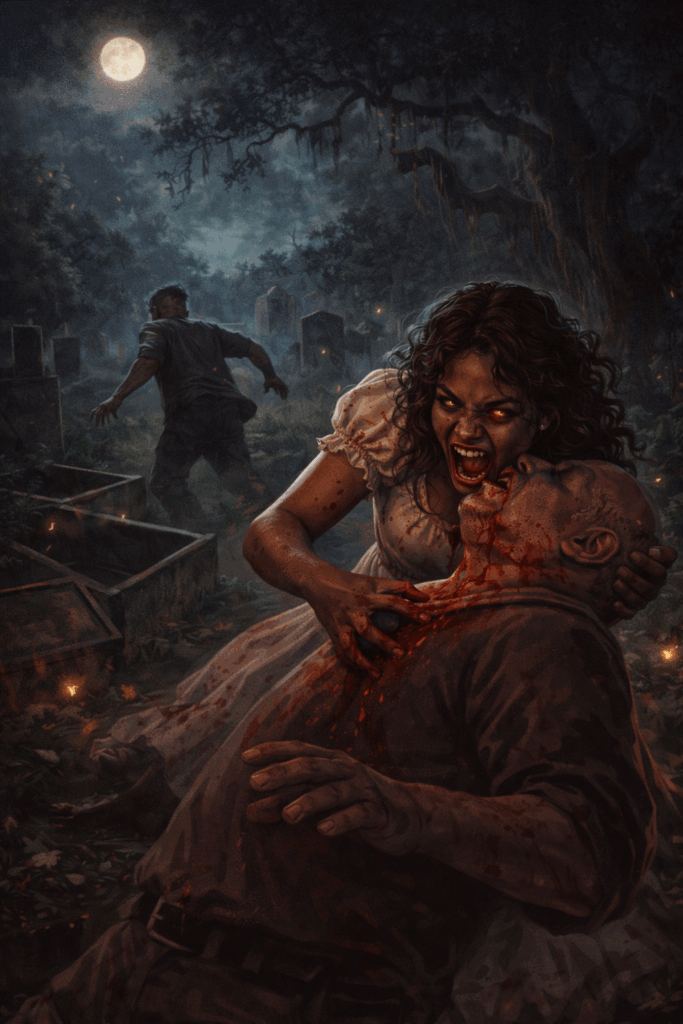
The larger man’s throat burst warmly beneath my teeth. His screams died quickly. The lanky one ran, clumsily, but I was faster, my arms stretching farther than they should. When I caught him, I tore into his neck, drank deep, and the world went red.
When I looked up, headlights washed the graveyard in pale gold. My family returned.
CeCe, Suzy, and Addy stood at the gate, their silk skirts brushing the earth. Papa and my parents lingered near the porch. My mother wept into my father’s shirt.
“My baby’s growing up,” she cried.
“She’s only fifteen,” Papa muttered, wiping his eyes. “Too young to change.”
“It’s the runoff from the—” Addy began.
“We know, Addy!” Suzy snapped.
CeCe set down her bag of swamp lily bulbs and looked at me; her usual scowl softened. “The lily keeps our land pure,” she said. “Without it, strangers can cross the borders—and you see what happens when they do.”
The others nodded. For the first time, I understood their fear. The shrinking crops, their tempers, the endless talk of lilies. It wasn’t farming, it was survival.
“Are all the graves empty, Papa?” I asked.
He chuckled softly. “Mostly. We try not to eat where we sleep. But it’s good to have a few filled, keeps up appearances.”
He put his arm around me, unbothered by the blood on my dress. “You did well tonight, ma petite vampire.”
I blushed. Papa is proud of me—finally.
“Do we die?” I whispered.
He smiled faintly. “Come inside. There’s something you must do first.”
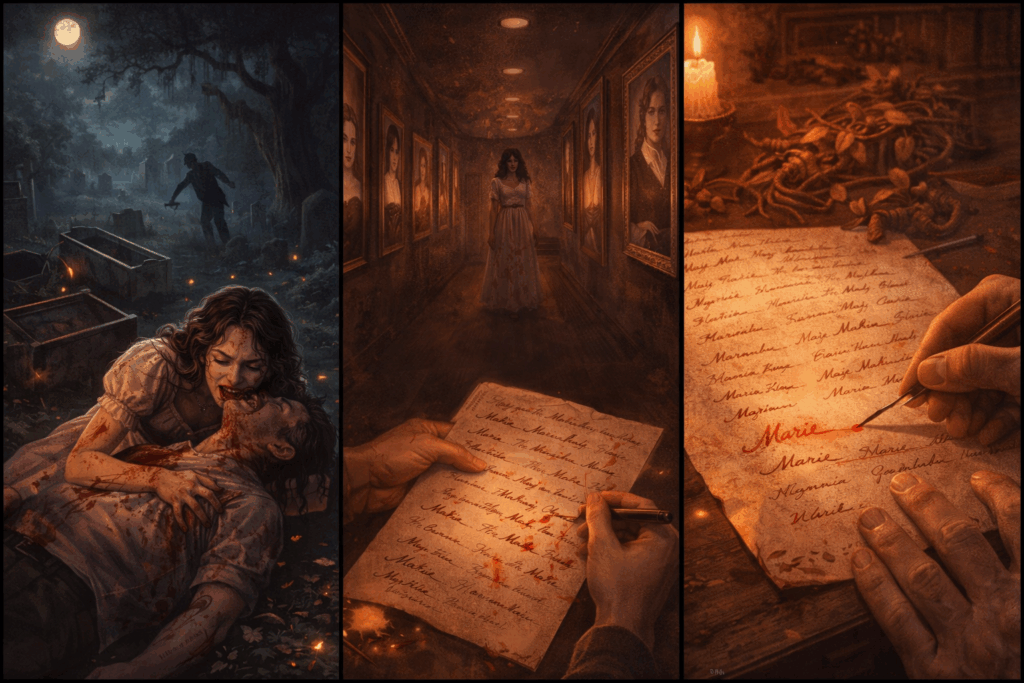
Papa led me into the kitchen, the swamp lily cake gleaming underneath the crystal dome, half eaten from the hole I violently carved in it. As Papa lifted the lid, I suddenly feared he would scold me for the cake. Weird to think this now with blood dripping off my chin. Papa pulled a folded piece of parchment resting where the remaining cake lay; its edges were burned, its ink dark as merlot.
“The Rachal contract,” he said. “We sign when the blood has called us. When we are old enough and ready to understand what we are. You’re the youngest ever to sign ‘cher.”
The paper had dozens, maybe hundreds, of names, each “Marie” written in looping ancient script—the beautiful calligraphy of a time gone by—others in brownish smears of centuries-old, dried blood.
Papa picked up the thick needle from the table that I had been using to thread the swamp lily, pricked his finger, and pressed it to the page, the parchment absorbing his blood as if it were thirsty.
He handed me the needle.
“Go on now, ‘cher”.
I felt my heart thud fiercely against my chest, rattling my rib cage, knowing that this would be the last time my heart would beat. I did the same as Papa, the wound sealing itself instantly, leaving only a feeling of warmth coursing through my veins. My name glowed and attached itself to the other names of the list, faintly red beside his.
Outside, I could hear CeCe and Addy arguing as they dragged the drained bodies into the empty graves.
Suzy hummed an old French love song.
I felt something grow inside me – sharp, intense strength – hunger.
He told me that there would never be enough blood at the beginning, that over time, I would learn, like all of them had to, to ease the pangs. This was what it meant to be Rachal. This was my legacy. Papa poured himself a glass of Wellers, raising it in the air.
“To the family”.
“To blood,” I said.